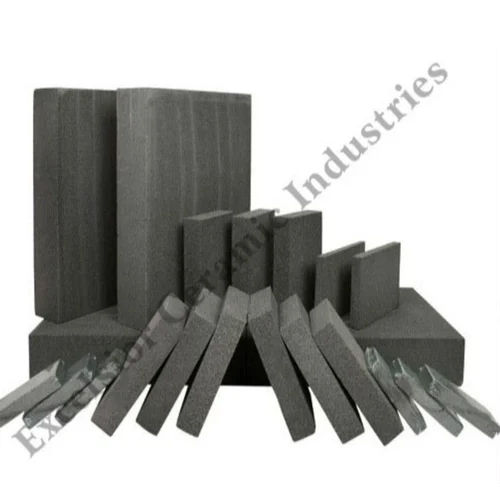
About Foam Glass Wool
| Available Colors |
Black |
| Available Shapes |
Rectangular, Square |
| Available Thickness |
10-100 mm |
| Usage/Application |
INSULATION |
| Size |
600x450 |
| Thickness |
10 to 100 |
A wide range of Foam Glass is used in various industries for different applications.Note: Price range varies as per specification & Requirement, also depends upon the size of the product.Exceptional Fire and Moisture ResistanceFoam Glass Wool stands out with its Class A1 non-combustible fire rating and ultra-low water absorption of less than 0.2% by volume. Its high moisture resistance ensures dimensional stability and longevity even in humid or wet environments, making it a reliable choice for industrial insulation.
Superior Thermal and Acoustic PerformanceWith a thermal conductivity between 0.038 to 0.041 W/mK and effective sound absorption properties, foam glass wool delivers excellent insulation for both thermal and acoustic needs. This makes it particularly advantageous in controlling energy loss and managing noise in industrial settings.
Customizable Shapes and Easy InstallationAvailable in standard blocks, slabs, or custom cuts, foam glass wool provides flexibility for diverse applications. It can be installed through direct placement or mechanical fixing. Customizable sizes and thicknesses make it suitable for various industrial projects, ensuring optimal coverage and efficiency.
FAQ's of Foam Glass Wool:
Q: How is foam glass wool installed for industrial applications?
A: Foam glass wool can be installed by direct placement onto surfaces or using mechanical fixing methods. For best results, follow the manufacturer's installation guidelines, ensuring the material is properly fitted and joints are sealed to optimize insulation performance.
Q: What are the primary uses of foam glass wool insulation?
A: Foam glass wool is mainly used for thermal and acoustic insulation in industrial settings. Its key applications include insulating piping, tanks, HVAC systems, chimneys, cold storage facilities, and various industrial equipment requiring fire and moisture resistance.
Q: When is foam glass wool preferred over other insulation materials?
A: Foam glass wool is ideal when maximum fire resistance, low water absorption, chemical stability, and a long service life are required. Its non-combustible Class A1 rating and resistance to most chemicals make it especially suitable for harsh or hazardous environments.
Q: Where can foam glass wool be used?
A: It can be used in a variety of locations, including factories, petroleum plants, refrigerated storage, power stations, and any industrial site where effective insulation and fire safety are essential. Its adaptability allows for use in both new constructions and retrofit projects.
Q: What benefits does foam glass wool offer regarding environmental safety?
A: Foam glass wool is asbestos-free, non-toxic, and classified as environmentally safe. Its long lifespan reduces replacement frequency, minimizing environmental impact over time. Additionally, being odorless, it does not affect indoor air quality.
Q: How long does foam glass wool last in service, and what affects its durability?
A: Foam glass wool typically has a service life of over 25 years under normal operating conditions. Its water resistance, chemical stability, and dimensional integrity help ensure longevity, provided it is installed and maintained according to recommended procedures.
 Send Inquiry



 Send Inquiry


 Send Inquiry


 English
 Spanish
 French
 German
 Italian
 Chinese (Simplified)
 Japanese
 Korean
 Arabic
 Portuguese
